What is a Remote Automated Weather Station (RAWS)?
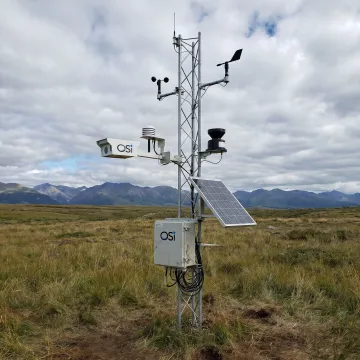
A Remote Automated Weather Station, or RAWS, is a field-deployed monitoring system that collects weather and environmental data with minimal on-site staffing. Typical systems measure conditions such as wind, precipitation, visibility, temperature, humidity, and atmospheric behavior, then transmit data to operators. OSI supports RAWS-style deployments through sensor selection, integration, communications design, commissioning, and long-term technical support.
What types of sensors can OSI integrate into RAWS systems?
OSI integrates optical and meteorological instruments for precipitation, present weather, visibility, air or gas flow, crosswinds, turbulence, and related environmental parameters. Systems can include OSI optical sensors as well as selected third-party meteorological, flow, and atmospheric instruments. The final configuration is engineered around the site’s data requirements, mounting conditions, power availability, and reporting workflow.
Can RAWS systems operate in remote locations without grid power?
Yes. OSI Systems Integration can design weather and environmental monitoring stations with power and communications options suited to remote sites. Depending on the application, this may include solar power, AC power where available, cellular telemetry, satellite communications, or integration with customer data acquisition systems. The design goal is dependable unattended operation with practical maintenance requirements.
Does OSI provide installation and commissioning support?
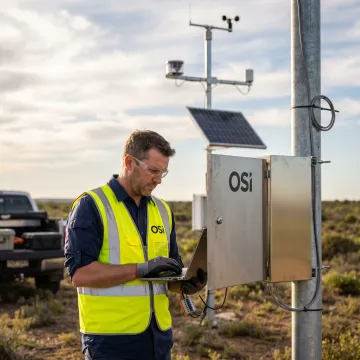
OSI Field Engineering provides on-site installation, commissioning, calibration verification, troubleshooting, and field support for OSI sensors and systems worldwide. Engineers verify sensor alignment, integration with SCADA, DCS, or data acquisition platforms, and operational performance before handoff. This helps ensure the RAWS system is properly installed and ready to deliver reliable real-time data.
How much maintenance do OSI weather monitoring systems require?
OSI systems are engineered for low maintenance using optical scintillation-based technology, no moving parts in key sensor designs, continuous self-test features, and built-in performance monitoring. Many OSI sensors are designed to avoid scheduled optics cleaning and remain insensitive to dirt buildup. Maintenance needs vary by configuration, environment, and customer operating procedures, but reduced field attention is a major design advantage.
Do you provide training for RAWS operators and maintenance teams?
Yes. OSI provides training in operation, normal use, routine maintenance, troubleshooting, service procedures, and integration with data acquisition systems. Weather sensor and AWOS or MAWOS training can be conducted at OSI’s Gaithersburg, Maryland facility, while select optical flow sensor training may be available at OSI or the customer’s site. Training helps teams operate systems confidently.
Can OSI upgrade or integrate with existing weather station infrastructure?
OSI can support systems integration projects that combine OSI optical sensors with third-party meteorological, atmospheric, and data acquisition equipment. For existing infrastructure, the team reviews communications, mounting, enclosure, power, software, and operational requirements before recommending an integration approach. Field engineering can also assist with alignment, verification, troubleshooting, and commissioning during system upgrades.
How are repairs and RMAs handled for OSI equipment?
OSI repair and refurbishment work requires an RMA number before any item is returned for service. Customer Service assists with RMA requests, order status, and shipping or receiving coordination. Repairs are performed at the Gaithersburg, Maryland facility, with calibration verification before return. Warranty repairs follow warranty conditions; out-of-warranty repairs require billing information such as a purchase order or credit card.