Introduction
Most facilities running continuous emissions monitoring systems (CEMS) don't realize how much calibration gas costs them until they audit the line items. Expired EPA Protocol 1 cylinders, overstocked inventory buffers, and demurrage charges on cylinders held past contracted return windows add up fast — and most of it goes unexamined.
The recurring spend is significant. Industry estimates put annual CEMS operating costs — calibration gases, consumables, and QA services — at 3% to 6% of total installed system cost, which ranges from $120,000 to $350,000 for a single-stack, multi-gas configuration. That's a controllable expense most facilities treat as fixed.
The core problem is that calibration gas expenses get categorized as fixed operating costs when they're actually a function of specific decisions: how cylinders are procured, how calibration activities are scheduled, and what underlying technology a CEMS uses. This article examines each dimension and where the real reduction opportunities sit.
Key Takeaways
- Total calibration gas spend includes cylinder pricing, rental fees, demurrage, labor, and shelf-life waste — not just the gas price
- EPA Method 205 dilution systems reduce multi-range cylinder requirements to one Protocol 1 cylinder per gas species
- Cylinder standardization, consumption-based sizing, and inventory tracking deliver quick cost reductions without capital investment
- Analyzer technologies with built-in self-diagnostics or optical measurement principles reduce how often and how much calibration gas a system needs
- Reducing costs starts with identifying where spend originates, not just negotiating lower cylinder prices
How Calibration Gas Costs Build Up in CEMS Operations
Calibration gas cost isn't a single line item. It's a layered accumulation that most facilities only partially see.
The visible layer includes cylinder purchase price and ongoing rental or lease fees. The less visible layer is where costs compound:
- Demurrage charges on cylinders held beyond contracted return windows
- Labor costs for cylinder transport, handling, and tracking
- Recertification fees when cylinders are retained past their certification window
- Disposal or return logistics for cylinders that expire before use
Where Costs Spike vs. Where They Steadily Accumulate
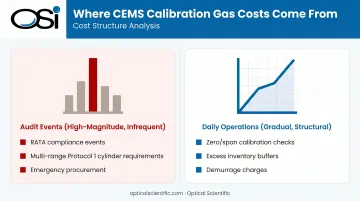
Costs escalate sharply around Relative Accuracy Test Audits (RATAs) and other formal compliance events. During a RATA, auditors may require separate EPA Protocol 1 cylinders for each gas species and each analyzer range — a configuration that can require a large cylinder inventory for a single audit event. These costs are infrequent but high-magnitude.
Between audits, costs build more gradually through daily zero and span calibration checks required under EPA QA procedures. When facilities maintain cylinder inventories larger than necessary — a common hedge against running short — that overage becomes a structural cost buffer that rarely gets reviewed. This is where most of the reducible spend actually lives, and it's the first place worth auditing.
Key Cost Drivers for Calibration Gas Expenses
Three factors account for most excess calibration gas spending. Identifying them is the first step toward cutting costs without compromising compliance.
Multi-Range, Multi-Species Analyzer Configurations
This is the largest single cost driver. When a CEMS includes analyzers configured for multiple concentration ranges, a separate Protocol 1 cylinder at the appropriate concentration is traditionally required for each range and each gas species. On a multi-analyzer, multi-gas system, cylinder counts multiply fast. Each one brings its own rental, recertification, and logistics costs.
Reactive Procurement Practices
Facilities that order cylinders reactively rather than strategically consistently overpay. Common procurement problems include:
- Buying cylinders in response to upcoming audits rather than on a planned schedule
- Failing to consolidate specifications across similar sources or combustion units
- Maintaining too many unique cylinder specifications, which prevents volume pricing and complicates inventory management
CEMS Reliability
This one is rarely framed as a calibration gas cost, but it is. When a CEMS exceeds Calibration Error thresholds over multiple consecutive operating days, it enters an "out-of-control" status under EPA QA definitions. That status requires immediate corrective calibration — unscheduled, outside planned inventory, and often sourced at premium cost on short notice. Frequent drift is a hidden budget drain that most facilities never account for in their annual gas spend projections.
Cost-Reduction Strategies for Calibration Gas Expenses
Strategies fall into three categories depending on where the cost originates: procurement and method decisions, operational management practices, or the underlying technology environment.
Strategies That Change Procurement and Method Decisions
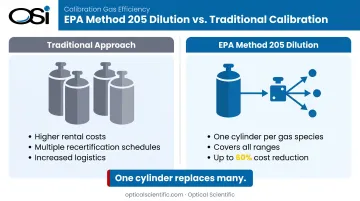
Adopt EPA Method 205 gas dilution systems. EPA Method 205 (Appendix M to 40 CFR Part 51) permits the use of certified computerized gas dilution instruments during compliance audits. A single high-concentration Protocol 1 cylinder per gas species can generate calibration points across all analyzer concentration ranges, replacing the traditional one-cylinder-per-range requirement. For facilities with multi-range analyzers, this can reduce Protocol 1 cylinder counts substantially — gas dilution equipment suppliers have cited reductions in calibration gas costs of up to 60% in some configurations. The one-time equipment investment trades against ongoing cylinder cost reductions across every subsequent compliance cycle.
Standardize calibration gas mixtures across similar sources. Facilities running multiple boilers of the same type on the same fuel often use different cylinder specifications for each unit, a legacy of how procurement decisions accumulated over time rather than any technical necessity. Consolidating to a common specification across similar sources:
- Reduces the number of unique cylinders managed
- Creates volume purchasing leverage
- Simplifies recertification tracking
- Lowers the risk of using mismatched cylinders during an audit
Right-size cylinder volume to actual consumption. Oversized cylinders lead to gas expiring before use. Undersized cylinders mean more frequent reorders and higher per-unit handling costs. Building a consumption estimate is straightforward: multiply daily calibration check gas volume by operating days, then add audit cycle gas requirements. Most facilities find their actual consumption is well below what they're purchasing for.
Evaluate protocol gas blends for multi-gas setups. For certain multi-component analyzer configurations, certified blended gas mixtures can replace multiple single-species cylinders, reducing both cylinder count and associated logistics costs.
Strategies That Change How Calibration Is Managed
Implement cylinder lifecycle tracking. Demurrage on cylinders held past contracted return windows is one of the most consistently overlooked costs in CEMS operations. A basic tracking system (even a spreadsheet) that logs cylinder receipt dates, usage rates, and return deadlines can eliminate charges that often appear buried in gas supplier invoices. Facilities that audit this for the first time typically find costs they weren't aware were recurring.
Align calibration check frequency with the regulatory floor. EPA QA procedures under 40 CFR Part 75 Appendix B specify minimum calibration check frequencies, not targets to exceed. Some facilities run checks more often than required, driven by caution rather than regulatory necessity. Mapping actual practice against the regulatory minimum for the applicable subpart can reveal gas consumption that's entirely discretionary.
Proactively maintain CEMS to prevent out-of-control periods. Every unscheduled corrective calibration event consumes gas outside planned inventory and may require emergency cylinder procurement. Preventive maintenance that reduces drift exceedances pays for itself through avoided emergency gas costs, in addition to avoiding the data substitution requirements triggered by out-of-control periods.
Conduct a pre-audit cylinder review before every RATA. Auditors occasionally arrive to find cylinders at concentrations mismatched to the current analyzer configuration, requiring last-minute substitutions at premium cost. A structured pre-RATA review that confirms each cylinder is properly certified, within shelf life, and matched to current analyzer ranges prevents both waste and emergency procurement.
Strategies That Change the Technology Environment
Select analyzer technologies based on gas dependency. Analyzer design is the deepest lever on calibration gas consumption because it determines the baseline requirement: how often and how much gas a system needs for verification throughout its operational life.
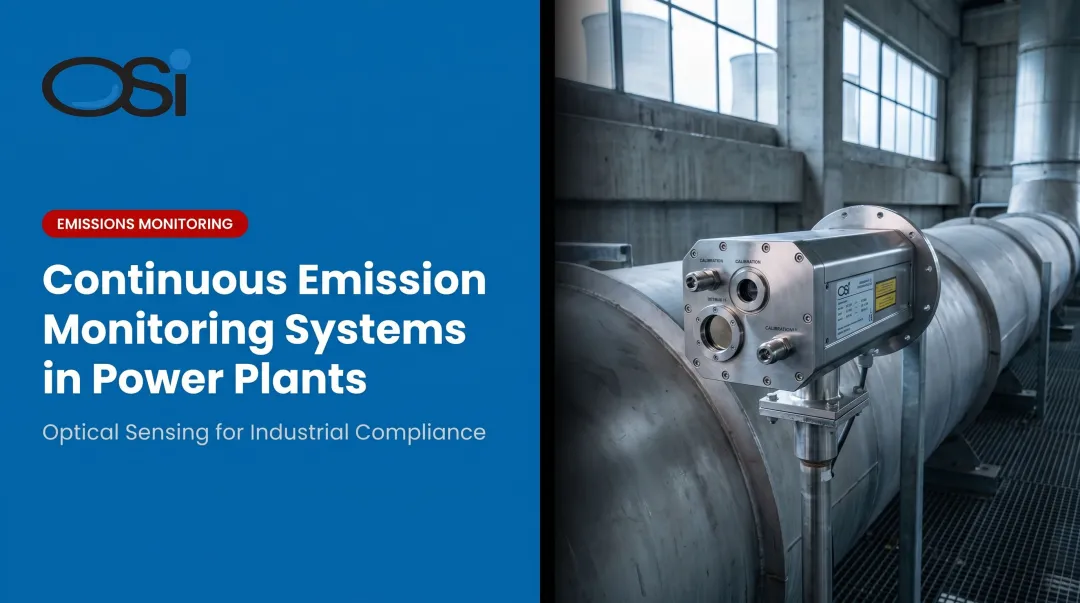
In-situ and optical analyzers with built-in continuous self-diagnostics can reduce external gas calibration frequency compared to extractive systems requiring more intensive QA routines. For flow measurement specifically, OSI's Optical Flow Sensor (OFS) series — developed for EPA 40 CFR Part 75 stack gas flow compliance — operates on an optical scintillation principle that is drift-free by design. The OFS eliminates calibration gas requirements entirely:
- No Protocol 1 cylinders at any point in its operational life
- No calibration intervals or recertification scheduling
- Built-in continuous self-diagnostics monitoring system performance 24/7
- Automatic fault alarming if drift exceeds 3% from norm
- Zero calibration faults triggered since 1999
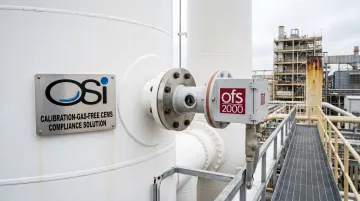
For facilities where flow measurement is part of the CEMS configuration, that's one cost category removed from the compliance budget permanently.
Multiplex calibration gas systems across shared stacks. Facilities with multiple stacks on similar fuel types and load profiles can install a shared calibration gas manifold serving several analyzers from a single cylinder supply. Applicable regulatory constraints exist on this approach, and it requires confirmation against the specific subpart requirements for each analyzer. Where permitted, it can significantly reduce total cylinder count.
Align cylinder certification renewal with RATA schedules. Protocol gas certification windows are fixed by EPA requirements, but working with accredited gas suppliers to align recertification dates with planned compliance events reduces the frequency of cylinders being replaced due to certification expiry rather than actual depletion. This is a planning exercise, not a negotiation, but it reduces waste across multi-year compliance cycles.
Conclusion
Calibration gas expenses become excessive not because they're inherently large, but because they're rarely examined at the source. Facilities that treat these costs as fixed miss the procurement decisions, management gaps, and technology choices that actually determine how much gets spent.
The most durable reductions come from decisions made early — method selection, technology choice, cylinder specification — supported by operational discipline around tracking, scheduling, and maintenance. Facilities that build on those foundations — rather than chasing lower per-cylinder prices — tend to cut total calibration spend by 20–40%, with gains that hold year over year.
Frequently Asked Questions
What is a CEMS?
A Continuous Emissions Monitoring System (CEMS) is the complete equipment set (analyzers, sampling hardware, and data acquisition software) used to measure pollutant concentrations or emission rates from industrial stacks. CEMS produce legally defensible compliance data required under EPA regulations, including 40 CFR Parts 60 and 75.
How much does a CEMS system cost?
Total installed costs for a single-stack, multi-gas CEMS typically range from $120,000 to $350,000 in capital expenditure. Annual operating costs — including calibration gases, consumables, and QA services — generally run between 3% and 6% of that installed cost.
How often do CEMS require calibration gas checks?
EPA QA procedures require at minimum daily zero and span calibration error checks, plus semi-annual or annual RATAs depending on the applicable regulatory subpart. These requirements establish the baseline gas consumption a facility cannot eliminate through operational decisions alone.
What is EPA Protocol 1 gas and why is it expensive?
EPA Protocol 1 gases are certified reference mixtures meeting strict accuracy and NIST traceability standards required for CEMS calibration. Costs reflect specialty blending, certification, and recertification. Separate cylinders are required across different concentration ranges and gas species, which multiplies total spend quickly.
What is EPA Method 205 and how does it reduce calibration gas costs?
EPA Method 205 (Appendix M to 40 CFR Part 51) permits certified gas dilution instruments during compliance audits. A single high-concentration Protocol 1 cylinder per gas species can cover all analyzer ranges, reducing the total cylinder count per audit and cutting rental, handling, and recertification costs.
Can technology choices reduce calibration gas expenses over time?
Yes. Analyzers with built-in self-diagnostics, strong drift stability, or optical measurement principles that don't require periodic gas injection can structurally reduce calibration gas requirements. Some optical technologies eliminate gas-based verification entirely over a system's operational life.