What automated weather station capabilities does Optical Scientific provide?
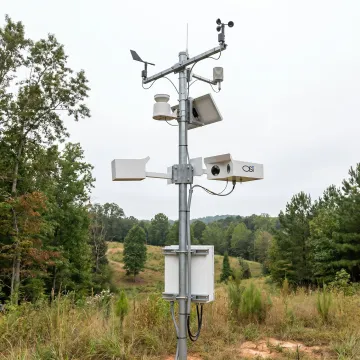
Optical Scientific designs and supports automated weather and environmental monitoring systems using optical sensors and integrated data acquisition. Capabilities include present weather, visibility, precipitation, wind, crosswind, turbulence, atmospheric monitoring, power, communications, enclosures, software, and on-site commissioning. Systems can be configured for aviation, transportation, research, government, energy, industrial, and environmental compliance applications.
Are these systems suitable for Georgia environmental monitoring projects?
Yes. OSI systems can be configured for Georgia conditions such as high humidity, heavy rainfall, thunderstorm activity, changing coastal weather, and complex inland terrain. Optical sensor designs with no moving parts, built-in diagnostics, and resistance to dirt buildup help reduce maintenance while supporting continuous data collection for agencies, universities, airports, utilities, and industrial facilities.
Does Optical Scientific install weather stations on site?
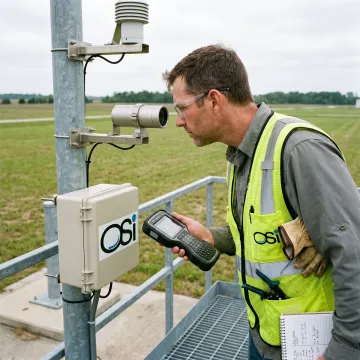
Yes. OSI Field Engineering provides on-site installation, commissioning, calibration verification, troubleshooting, and field support for weather observation systems and optical sensors. Engineers verify alignment, mounting, power, communications, data acquisition, and integration with customer SCADA, DCS, or other data systems before handoff, helping ensure the station operates properly in the field.
Can OSI integrate third-party sensors into a weather station?
Yes. OSI Systems Integration can combine OSI optical sensors with selected third-party meteorological, atmospheric, flow, and environmental instruments. Integration may include sensor selection, mounting and enclosure design, AC or solar power, cellular or satellite communications, data acquisition software, and commissioning. This allows customers to build complete monitoring stations around their specific operational requirements.
What makes OSI optical sensors low maintenance?
OSI sensor technology is designed for reliable 24/7/365 operation with no moving parts, digital DSP-based architecture, continuous self-test features, and optics that do not require scheduled cleaning in typical use. The systems are engineered to remain insensitive to dirt buildup on optics and avoid common mechanical gauge errors caused by high winds, evaporation, or moving components.
Do you provide training after system deployment?
Yes. Optical Scientific provides training for personnel responsible for operating, maintaining, and servicing OSI sensors and systems. Training can cover theory of operation, normal operation, routine maintenance, troubleshooting, data acquisition integration, technical documentation, and the repair or RMA process. Weather sensor and AWOS/MAWOS training is available through OSI’s established training program.
How does repair or warranty service work?
Repairs require an RMA number before any item is returned to OSI. Products have a standard 12-month warranty from date of shipment, subject to warranty conditions. Warranty repairs are handled according to the guarantee, while out-of-warranty service requires a purchase order or credit card number. Repaired units receive calibration verification before return.
What information should I provide for technical support?
When requesting technical support, provide the sensor model number, serial number, and a complete description of the problem, including symptoms, operating conditions, recent changes, and any error messages or data issues. OSI support staff can then review documentation, analyze the issue, recommend troubleshooting steps, and determine whether field service or an RMA is needed.